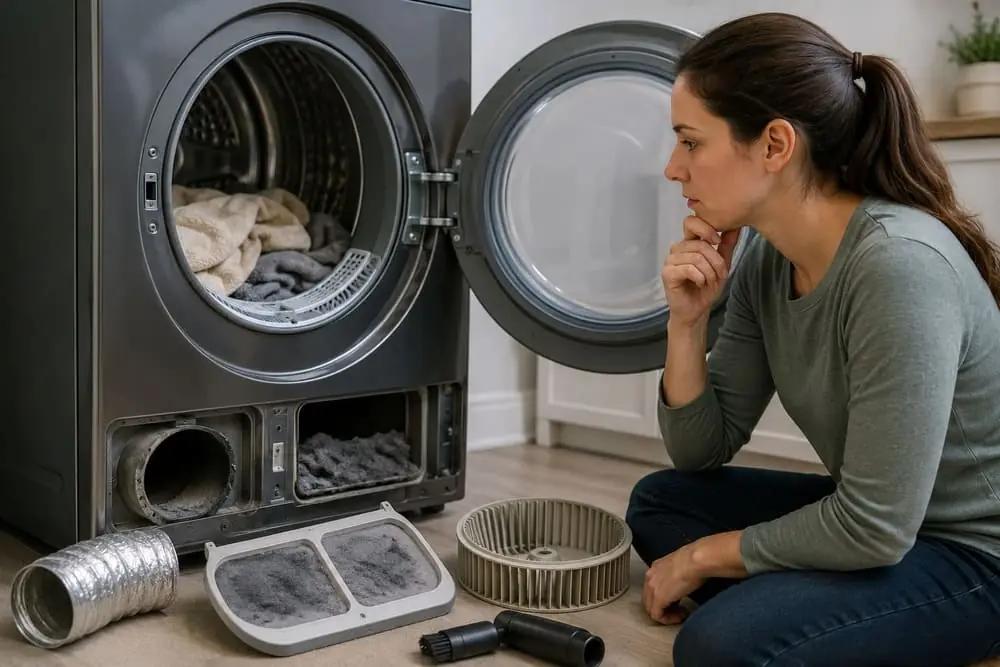
When a dryer takes multiple cycles to dry clothes, it can feel like a never-ending chore. Many homeowners find themselves frustrated when their laundry seems damp after two or even three full cycles. The root cause may not be as obvious as a simple lint buildup or a forgotten setting. There could be issues with airflow, heat, or even electrical problems. In some cases, what seems like a minor delay could point to a larger, underlying issue that needs professional attention.
Why Does My Dryer Take Multiple Cycles to Dry Clothes? Common Causes Explained
A dryer requiring multiple cycles often stems from airflow restrictions or inadequate heating. When the vent hose is overly long or clogged, moist air cannot escape efficiently, forcing the machine to repeat the drying process. This bottleneck can extend drying time significantly, even if the garment feels warm initially.
Check the Vent: Is Airflow the Problem?
Blocked or excessively long vent hoses are frequent culprits behind extended drying times. A clogged vent restricts airflow, while a long run creates resistance that traps damp air inside the drum.
- Inspect the exhaust hose for kinks or heavy lint buildup
- Ensure the vent path has minimal bends and stays under ten feet
- Check for exterior vent flaps that might be stuck or blocked by debris
When airflow is compromised, the dryer works harder without effectively removing moisture, leading to repeated cycles.
Additionally, partial heating element failure or a malfunctioning thermostat can interrupt heat production, leaving clothes damp despite extended run times. These issues require professional inspection to diagnose accurately.
Moisture sensors may also misread fabric dryness due to residue buildup, causing the cycle to extend unnecessarily. Regular maintenance and expert servicing help identify and resolve these underlying problems efficiently.
Sensors, Timers, and the Moisture Reading System
Faulty moisture sensors or outdated timers can cause the dryer to continue running long after clothes are actually dry. This extends energy use and accelerates wear on internal components. Professional diagnostic tools detect sensor failures that DIY methods might miss.
Electrical Issues That Can Make Your Dryer Take Too Long to Dry
Intermittent power supply, such as a tripped breaker or loose 240V connections, can reduce heating efficiency. This results in inadequate drying despite long cycle times. Certified technicians test voltage levels and wiring integrity to ensure optimal performance.
When Your Dryer Takes Two Cycles or Even Three Hours to Dry
Common mistakes like overloading the drum or using incorrect settings contribute to prolonged drying. Professional guidance helps troubleshoot these issues correctly, preventing further damage and improving drying efficiency through proper maintenance.
How to Diagnose a Dryer Taking Too Long to Dry Without Damaging It
While basic checks like clearing lint filters are manageable, internal components require expert handling. Certified professionals safely test heating elements, thermostats, and sensors to pinpoint failures without risking damage to your appliance.
When the Heating Element Is Only Partially Working
A partially functional heating element may warm the air but lacks sufficient power to dry clothes thoroughly. This often requires replacing the entire unit, a task best left to trained technicians to avoid electrical hazards and ensure proper installation.
Cleaning Behind Your Dryer and Under the Dryer Drum
Accumulated lint and debris behind or beneath the drum restrict airflow and reduce drying efficiency. Professional deep cleaning services safely remove buildup without damaging sensitive components, restoring optimal performance.
How Home Renovations or Roof Work Can Block the Dryer Vent
Construction activities may inadvertently compress or block the exhaust vent, leading to extended drying times. Expert vent inspections identify obstructions caused by external work and restore proper airflow.
Why Indoor Venting and Long Duct Runs Are Problematic
Indoor venting or excessively long duct runs significantly hinder efficient moisture removal, causing repeated cycles. Certified specialists evaluate duct design and recommend improvements to enhance dryer functionality and safety.
Check the Vent: Is Airflow the Problem?
How a Blocked or Long Vent Hose Can Slow Down Drying
Running long vent pipes that bend or twist significantly creates resistance that reduces how efficiently moist air escapes from your dryer. Even small amounts of lint buildup in these areas can worsen airflow issues over time, making drying cycles take much longer than they should.
Signs You Need Dryer Vent Cleaning Services
Common warning signs include slower drying times, clothes that feel damp at the end of a cycle, and visible lint buildup near the vent outlet. A professional vent cleaning service ensures all blockages are properly removed and your system runs efficiently without risking damage to your dryer.
Is Your Dryer Getting Enough Heat?
When a dryer struggles to dry clothes in one cycle, insufficient heat is often the root cause. Understanding how heat production works in your appliance helps identify whether repairs are needed.
The Role of the Heating Element in Proper Drying
Why Heat Production Matters for Efficient Drying
The heating element in a dryer acts as the primary source of warmth needed to evaporate moisture from fabrics. Without it, even with proper airflow, clothes will remain damp after multiple cycles. Older dryers often use dual-coil elements that can fail partially—one coil may burn out while the other still works, producing enough warmth to feel present but not hot enough for effective drying.
When the Heating Element Is Only Partially Working
Signs That Suggest Partial Heating Failure
Users have reported noticing that only one or two loops of the heating coil glow red during operation, while the rest remain cool. This indicates that the element is not generating sufficient heat across all parts, which significantly reduces drying efficiency. If this occurs, the heating element should be tested for continuity using a multimeter and replaced if any section fails the test.
What a Burned Out Thermostat Means for Your Dryer and the Heat Output
How a Failing Thermostat Affects Temperature Regulation
The high-limit thermostat shuts off the heating element if the dryer overheats, while the cycling thermostat controls how often heat is applied during a cycle. If either fails, heat production becomes inconsistent. A faulty thermostat might cut off heat prematurely, leading to longer drying times and incomplete drying. These components must be tested with a multimeter and replaced if continuity is lost.
- Heating elements can fail partially, producing just enough warmth to trick users into thinking the dryer works.
- Thermostats regulate heat output; when they malfunction, heat becomes unreliable or absent.
- Testing these parts with a multimeter helps determine whether replacement is necessary.
Sensors, Timers, and the Moisture Reading System
Modern dryers rely on electronic components to determine when clothes are dry. These systems can fail or become less effective over time, leading to extended drying cycles.
Are Your Moisture Sensors or Thermostats Failing?
Moisture sensors play a critical role in automatic drying cycles. These sensors detect the level of moisture in your laundry and send signals to the control board when clothes appear dry. However, these sensors can accumulate residue from fabric softeners or other cleaning products, reducing their sensitivity. This can cause them to incorrectly report that clothes are still wet, prompting additional unnecessary cycles.
Thermostats also play a significant role in proper operation. The high-limit thermostat monitors temperature and shuts off heating if the dryer overheats. If this component fails, it might turn off prematurely even when temperatures are safe, interrupting heat cycles and extending drying time. The cycling thermostat regulates air temperature by turning heat on and off. Failure in this component can result in intermittent or ineffective heating during cycles.
Using the Sensor Dry Setting: Does It Help or Hurt?
The sensor dry setting automatically adjusts cycle times based on detected moisture levels. However, if sensors are coated with residue or malfunctioning, this feature can actually cause longer drying times rather than shorter ones. Users may notice improved performance when using timed dry settings instead, though this consumes more energy and time overall.
Before assuming sensor failure, other common issues should be investigated. Airflow problems and heating element failures are more frequent causes of extended drying than sensor malfunctions. A qualified technician can properly test these components using specialized equipment to identify the root cause.
Electrical Issues That Can Make Your Dryer Take Too Long to Dry
When airflow isn’t the culprit, electrical problems often cause extended drying times. Understanding power supply issues helps homeowners address these hidden causes.
Is the Power Supply to Your Dryer the Problem?
A dryer running multiple cycles may be losing voltage along the way. The 240V supply is essential for heating efficiency, with each leg needing consistent current to maintain temperature. Even minor fluctuations impact how long clothes remain wet inside the drum.
Why Both 240V Legs Matter for Proper Dryer Operation
- Both legs deliver equal power for effective drying
- One leg failing means the dryer receives only half its required voltage
- Reduced voltage slows heating, extending dry time significantly
- Loose connections or broken breakers affect overall performance
Many homeowners miss this issue entirely since their appliance still produces some heat. Contact AppliAcen to inspect your wiring and breaker box, ensuring no hidden faults compromise your dryer’s efficiency.
Mechanical Failures Inside the Drum and Behind the Dryer
A Wobbly Blower Wheel or Clogged Airway
A wobbly blower wheel fails to circulate hot air efficiently, leaving clothes damp after extended running times. Debris like lint, small clothing items, or foreign objects can obstruct the airway, reducing airflow. This obstruction forces the dryer to work harder, increasing cycle duration. The blower wheel may also wear out over time, causing erratic spinning that disrupts consistent heat distribution.
Cleaning Behind Your Dryer and Under the Dryer Drum
Cleaning behind your dryer removes accumulated lint and debris that restrict airflow. Dust and particles trapped under the dryer drum can also cause inefficiencies, contributing to longer drying times. Regular maintenance ensures optimal performance and prevents premature component wear. If you notice unusual vibrations or excessive noise while the dryer runs, it may indicate a deeper mechanical issue requiring professional inspection.
Environmental Factors That Can Affect Drying Time
The location and surrounding conditions of your dryer play a significant role in drying performance.
How Home Renovations or Roof Work Can Block the Dryer Vent
Recent renovations or roof repairs might accidentally compromise your dryer’s venting system. If your roof was repaired recently, the installer may have compressed or kinked the vent pipe on top of your home.
Inspecting for Vent Damage After Construction
Look at the exterior vent cap. Is it blocked by shingles or debris? Have the workers double-checked the line from top to bottom.
Why Indoor Venting and Long Duct Runs Are Problematic
Long duct runs reduce airflow, increasing dry time significantly. Dryers installed in interior closets without direct outdoor exhaust suffer the most.
Understanding Duct Length Limitations
A typical vent should not exceed 25 feet with multiple elbows reducing that by a few feet each. If your setup exceeds this, moisture will not escape fast enough, forcing the machine to run longer cycles.
When Your Dryer Takes Two Cycles or Even Three Hours to Dry
Long drying times stem from various factors, ranging from user errors to hidden mechanical faults that require professional attention to avoid damage.
Common Mistakes That Cause Long Drying Times
Selecting incorrect settings like low heat or wrong fabric options wastes energy and time. Overloading the drum restricts airflow, preventing moisture escape. Leaving wet clothes inside after a cycle ends causes them to absorb moisture back. Skipping filter cleaning reduces airflow efficiency. Using damaged door seals allows heat to escape.
Should You Replace Parts or Call a Pro?
- Minor fixes include checking lint filters and vent connections.
- Internal parts like heating elements or thermostats often need professional replacement.
- Electrical checks, especially for 240V connections, require expertise to avoid hazards.
- Blower wheel or duct blockages may involve complex disassembly for safe removal.
- Ignoring small symptoms can lead to bigger issues like motor failure.
Contact a technician early to prevent further damage and ensure your dryer runs efficiently without causing additional harm to its components.
How to Diagnose a Dryer Taking Too Long to Dry Without Damaging It
When your appliance takes multiple cycles to dry clothes, pinpointing the issue requires careful observation and basic testing. Some checks can be done safely, while others demand professional expertise to avoid causing further damage.
What Tests You Can Do Safely
Performing Basic Visual and Physical Inspections
Start by examining the dryer’s exterior components. Remove the lint trap and check for debris buildup inside the housing. Inspect the vent hose connection at the back of the unit for tightness and any visible blockages. A clogged lint trap or loose hose can mimic deeper mechanical faults.
Running Dryer Cycles Without Clothes
Operate the machine empty on a no-heat setting to listen for unusual noises from the blower wheel or motor. Excessive wobbling or grinding sounds may signal an internal issue like a worn blower wheel mount, which could restrict airflow during actual loads.
Why You Should Let a Pro Inspect Internal Components Like the Heating Element and Thermostat
Accessing Internal Parts Requires Expertise
Testing the heating element, thermistor, or thermostat involves disconnecting power and accessing confined areas behind the dryer drum. Incorrect handling risks electric shock or accidental damage to delicate sensors. A certified technician from Appliance Repair Services uses specialized tools to test continuity and ensure proper voltage readings without voiding your warranty.
Ensuring Safe and Accurate Diagnostics
Internal failures, like a partially burnt heating coil or a faulty high-limit thermostat, often mimic airflow problems. Professionals verify both heat output and sensor responsiveness to prevent misdiagnosis. Attempting these checks without training may lead to unnecessary part replacements or costly mistakes.