
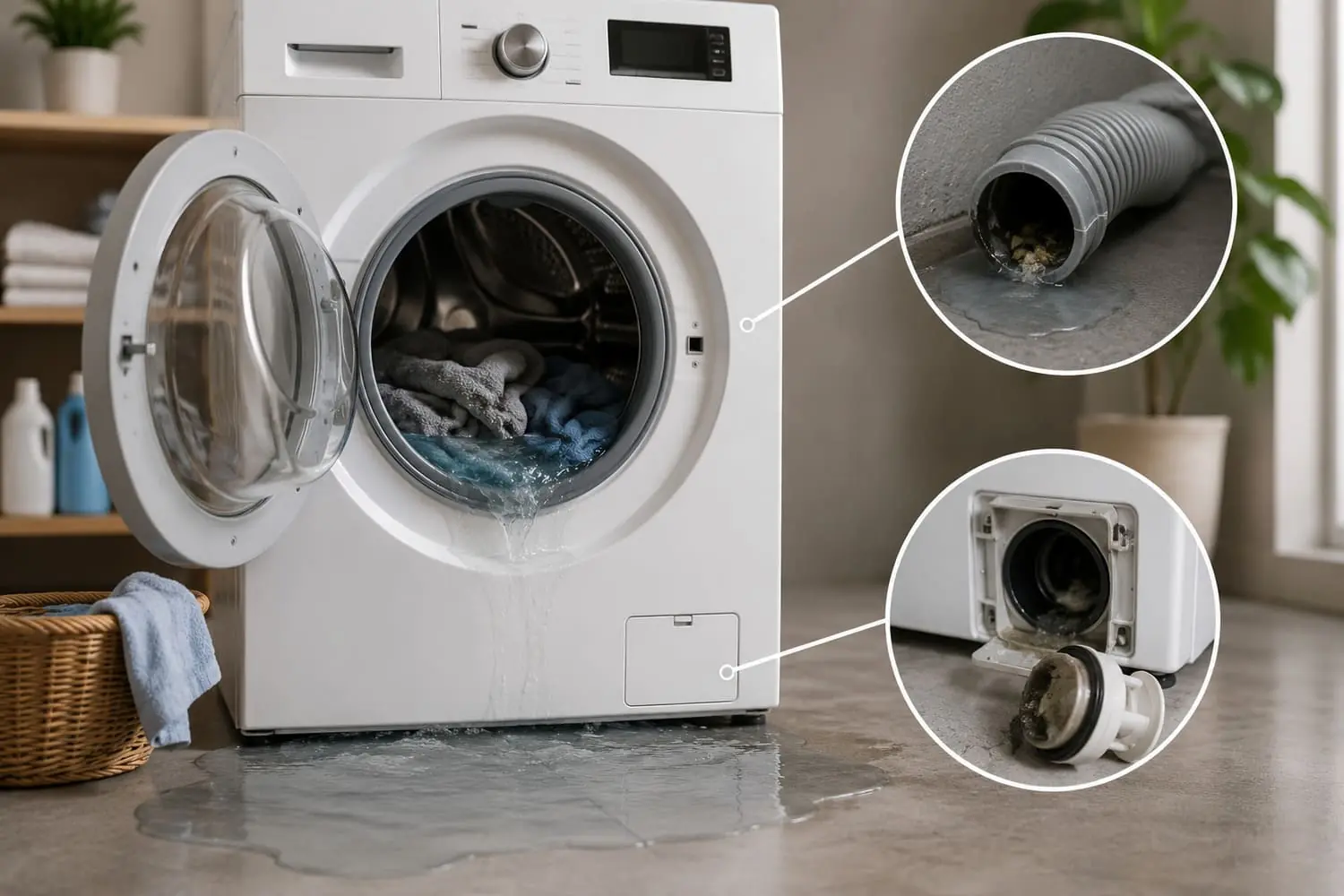
Experiencing issues with your washing machine not draining the water can be frustrating. Several factors could lead to this problem, from clogged hoses to washing machine pump problems.
If your front load washing machine won’t drain or spin, it’s essential to know what to check. Understanding these common issues will help you troubleshoot effectively and get your machine back to working order.
Common Reasons Why Your Washing Machine Is Not Draining
A washing machine that isn’t draining water can be a frustrating issue for many homeowners. Understanding the common reasons behind this problem can save time and effort in diagnosing and fixing the issue. Here’s a detailed overview of potential causes for why your washing machine is not draining the water.
Clogged Drain Hose and Pipe
One of the most common reasons a washing machine fails to drain is due to a clogged drain hose or pipe. Over time, lint, debris, and even small items can accumulate, blocking the flow of water. This obstruction not only hampers drainage but can also lead to a backup of water in the washing machine, causing it to not spin properly.
Blocked or Dirty Pump Filter
The pump filter in your machine is vital for maintaining proper water flow. If it becomes blocked with debris, it can restrict water drainage. Regularly checking and cleaning the pump filter can prevent this issue and ensure that the washing machine functions effectively.
Faulty Drain Pump Motor
The drain pump motor is responsible for removing water from the drum. If this motor fails, it can lead to a situation where the washing machine is not spinning water out effectively. In many cases, the motor may become damaged due to wear or other mechanical issues, necessitating replacement to resolve the problem.
Issues with the Lid Switch or Door Lock
Front load washing machines are equipped with a lid switch or door lock that prevents them from draining if the door is not securely closed. If this mechanism is defective or unable to detect that the door is closed, the machine will not drain, impacting the overall washing cycle.
Excessive Detergent Causing Suds Build-Up
Using too much detergent can lead to excess suds, which may inhibit the washing machine’s ability to drain water efficiently. Suds can create foam that blocks the drainage system, resulting in water retention. To avoid this situation, it’s essential to:
- Use the recommended amount of detergent based on your load size.
- Choose a high-efficiency detergent for front load washing machines.
- Avoid using non-HE detergents in high-efficiency machines.
By moderating the amount of detergent used, you can reduce the risk of suds buildup and ensure that the washing machine drains as intended.
Addressing these common issues will go a long way in resolving why your washing machine is not draining the water. Remember that if problems like washing machine pump problems persist, professional assistance may be required.
Troubleshooting Front Load Washing Machine Won’t Drain or Spin
If your front load washing machine won’t drain or spin, it can be frustrating and inconvenient. There are several issues that could prevent proper drainage and spinning, and identifying these problems is the first step towards resolution. Below are critical troubleshooting tips for addressing why your washing machine is not draining the water and not spinning the water out properly.
How to Check for Drainage Blockages
The first step in troubleshooting a washing machine that won’t drain is to check for any blockages in the drainage system. Start by inspecting the drain hose for kinks or clogs. Ensure the hose is securely connected to both the machine and the drain. If the hose appears clear, check the drain pipe for any obstructions. Sometimes, debris and lint can accumulate in the pipe, preventing water from flowing freely. Unclogging these areas may resolve the issue of the washing machine not draining water properly.
Inspecting the Drain Pump and Motor
If there are no visible blockages, the next step is to examine the drain pump and motor. The pump is responsible for removing water from the drum at the end of a cycle. First, ensure the machine is unplugged for safety. Access the drain pump, typically located at the bottom of the washer, and check for any debris or hair that may be causing a blockage. Additionally, listen for any unusual noises coming from the pump during operation, as this could indicate washing machine pump problems that require further assistance or replacement.
Diagnosing Door Lock and Control Board Problems
If the front load washing machine won’t drain or spin, the door lock mechanism could also be the culprit. If the door isn’t securely closed or if there’s a fault in the door lock, the machine may not progress through its cycle correctly. Inspect the door latch for any damage and ensure it’s engaging properly. Furthermore, issues with the control board can disrupt normal operations. If the machine displays error codes or behaves unexpectedly, consulting the user manual or a technician may be necessary to diagnose underlying electronic problems.
Proper Loading and Balance Issues Affecting Drain and Spin
Lastly, proper loading and balance of the washing machine drum significantly impact drainage and spinning efficiency. An imbalanced load can cause the machine to become unstable, preventing the drum from spinning properly. Ensure that clothes are evenly distributed inside the drum. Avoid overloading the washer, as this can lead to an inability to drain water effectively. By ensuring an appropriate load size and balance, many users can resolve issues related to not draining or spinning.
Maintenance Tips to Prevent Washing Machine Drainage Problems
Preventing drainage issues in washing machines requires regular maintenance and efficient practices. Following these tips can help ensure that your machine operates smoothly and avoids common problems associated with drainage.
Regular Cleaning of Drain Filters and Hoses
One of the most critical tasks for maintaining a washing machine is regularly cleaning the drain filters and hoses. Over time, debris, lint, and foreign objects can accumulate in these areas. This buildup can lead to clogs that cause the washing machine not to drain water properly. It is essential to inspect the drain hose and filter frequently to remove any obstructions:
- Detach the drain hose, and check for blockages.
- Clean the filter according to the manufacturer’s recommendations.
- Ensure the hose is positioned correctly without kinks or bends that could obstruct water flow.
Using the Right Type and Amount of Detergent
Utilizing the appropriate detergent type and quantity is crucial in preventing issues like excessive suds. Using too much detergent can lead to suds build-up, causing drainage problems. Make sure to follow the manufacturer’s instructions for detergent usage and choose a low-sudsing product, especially for front load washing machines. This practice helps to maintain proper washing and prevents excessive buildup inside the machine.
Scheduling Periodic Machine Inspections
Scheduling inspections can proactively address potential washing machine pump problems before they escalate. Regular checks of the machine’s components, such as the pump, hoses, and electrical connections, can lead to early detection of issues. Paying attention to unusual sounds during operation or failure to drain could indicate underlying problems that need immediate attention. Consider involving a professional for comprehensive assessments.
Avoiding Overloading and Proper Washer Use
Ensuring that the washing machine is not overloaded is crucial. Overloading can strain the machine and lead to insufficient water drainage, resulting in situations where the washing machine won’t drain the water effectively. Follow these guidelines for better maintenance:
- Load clothes evenly to maintain balance.
- Do not exceed the manufacturer’s recommended weight limit.
- Separate heavy items from lighter ones to ensure proper washing and spinning.
Being attentive to these factors can prevent common issues, including when the washing machine not spinning water out and address problems with performance.