
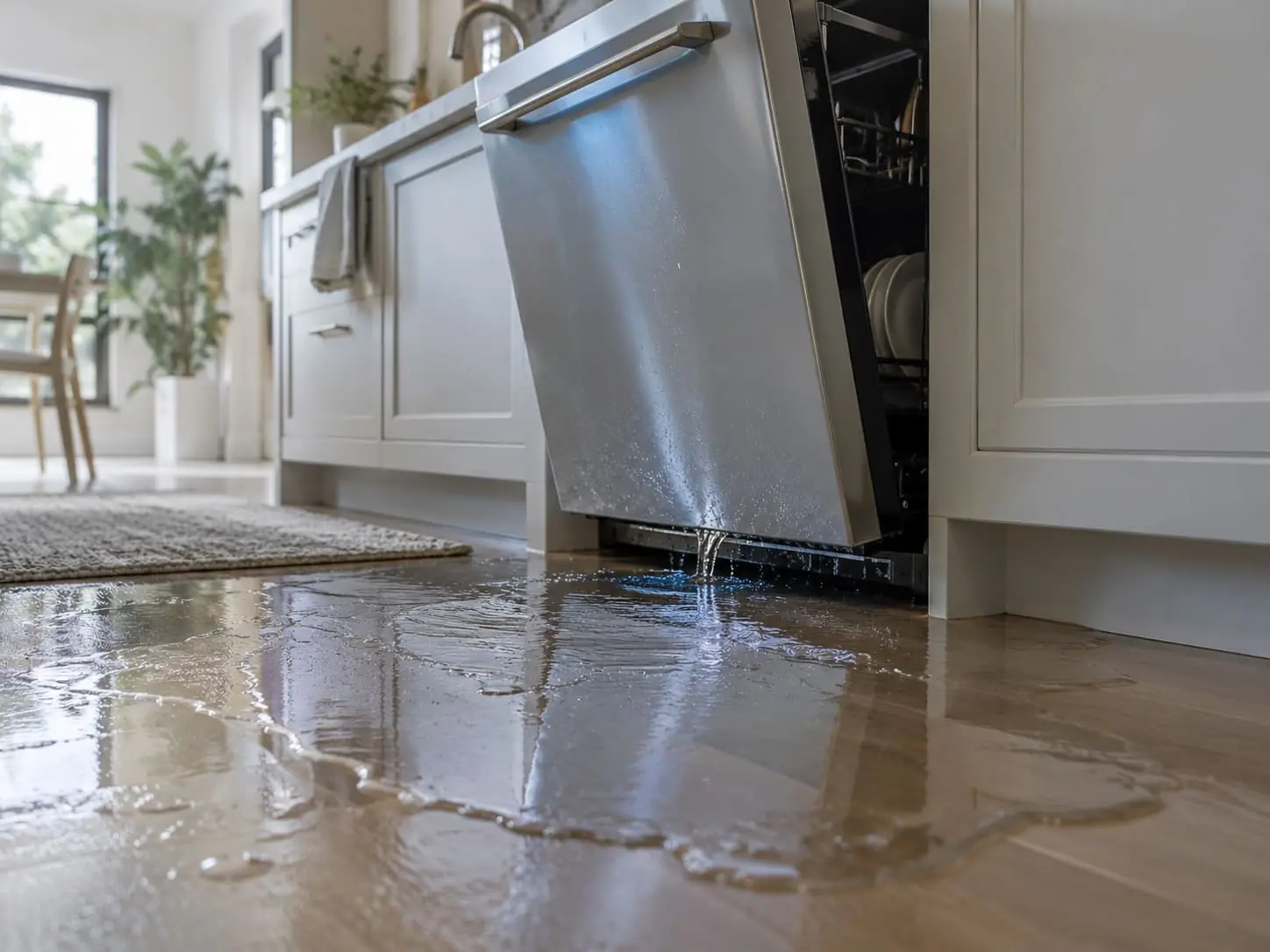
Water pooling under your dishwasher is a common and frustrating issue. While many homeowners attempt DIY fixes, these efforts often fail to address the root cause. Incorrect repairs can void your appliance’s warranty and lead to costly mistakes. Leaking from the bottom left corner or elsewhere often signals deeper internal problems. Simple surface fixes rarely solve persistent leaks. Professional diagnosis is crucial to prevent electrical hazards and further damage to your kitchen cabinetry.
Avoid Voiding Warranty With Incorrect Repairs
When a dishwasher begins leaking from the bottom, the instinct is often to jump online and attempt a DIY fix. However, this approach can lead to significant complications, particularly regarding manufacturer warranties. Most major appliance brands in the United States strictly require professional installation and service for warranty validity. If a homeowner attempts to open the panel, replace seals, or adjust internal components without proper certification, they risk voiding the entire warranty coverage.
- Unauthorized repairs often invalidate manufacturer guarantees, leaving owners responsible for full repair costs.
- Using generic parts instead of OEM components can cause further damage and void coverage.
- Incorrect diagnosis may lead to repeated failures, increasing long-term expenses significantly.
The risk extends beyond financial loss. Modern dishwashers are complex machines with intricate electrical and plumbing connections. An amateur attempt to resolve a leak can easily damage sensitive electronic boards or compromise the structural integrity of the unit. For instance, removing the bottom panel without understanding the specific model’s architecture might disconnect critical wiring harnesses. This not only creates immediate malfunction risks but also creates safety hazards that professional technicians are trained to identify and mitigate safely.
Many consumers underestimate the technical precision required for appliance repair. A minor misalignment during reassembly can lead to recurring leaks, electrical shorts, or even water damage to cabinetry. The cost of a professional service call is often negligible compared to the price of a new unit due to a voided warranty. Trusting licensed technicians ensures that repairs are performed correctly, using genuine parts and adhering to industry standards. This guarantees the appliance operates efficiently and safely, preserving the warranty for future needs.
Furthermore, professional services come with their own guarantees. When you hire a certified repair expert, the work performed is typically backed by a service warranty. This provides peace of mind, knowing that if the issue persists, it will be addressed at no additional cost. Attempting to save money on labor often results in higher bills down the road. Therefore, seeking expert help immediately is the most prudent financial decision for homeowners facing persistent leakage issues.
Prevent Electrical Hazards From Water Exposure
Water and electricity do not mix well, especially when hidden inside the complex wiring harnesses of modern kitchen appliances. When a dishwasher begins leaking from the bottom, the water does not just stay in the pan. It seeps into the electrical components that power the control board, the circulation pump, and the heating element. This proximity creates a dangerous environment for homeowners who might attempt to ignore the problem or delay calling for help. The risk is not limited to simple short circuits. It extends to the potential for electrocution during routine maintenance or cleaning tasks.
The control panel is particularly vulnerable because it houses sensitive electronic circuits that manage every cycle. If water breaches the insulation or finds a path through loose connections, it can cause immediate system failure. In many cases, this failure leaves the appliance completely dead, requiring expensive professional diagnostics to determine the exact point of failure. The cost of replacing a water-logged control board far exceeds the price of a standard service call. Homeowners often underestimate how quickly water can travel along wire looms, reaching components that seem far removed from the initial leak source.
- Exposed wiring near the base pan can lead to arcing and fire hazards.
- Corroded connectors may create intermittent power issues that are difficult to trace.
- Water ingress into the motor housing can cause catastrophic failure during operation.
Attempting to dry out these components yourself is rarely effective. The water is often trapped in areas that are inaccessible without disassembling the entire machine. Furthermore, residual moisture can remain even after the visible water is gone, leading to long-term corrosion that weakens connections over time. This gradual deterioration can result in sudden electrical failures weeks or months after the initial leak. Professional technicians have the proper tools to test for continuity and insulation resistance, ensuring that all electrical pathways are safe before the appliance is used again.
Ignoring these signs is a gamble with your home safety. The combination of standing water and live electrical currents is a recipe for disaster. It is crucial to have a qualified expert inspect the internal wiring and electrical connections once a leak is confirmed. This step is essential to prevent any potential hazards from escalating. Protecting your family and your home requires addressing the root cause of the water accumulation rather than just mopping up the symptom. Ensuring that all electrical components are dry and intact is the only way to guarantee safe operation.
Get Expert Diagnosis for Persistent Leaks
When water continues to pool beneath your appliance despite basic troubleshooting, the issue rarely resolves itself through guesswork. Many homeowners attempt temporary fixes that only delay the inevitable, often causing more extensive damage to surrounding cabinetry and flooring. Persistent moisture indicates a deeper mechanical failure that requires precise identification of the root cause. Without professional intervention, minor leaks can escalate into major water intrusion events that compromise the structural integrity of your kitchen.
Advanced diagnostic tools are essential for pinpointing failures in internal components like circulation pumps, door seals, or drainage systems. These specialized instruments detect minute pressure variations and electrical faults that are completely invisible to the naked eye. A technician can identify whether the leak originates from a cracked sump pump housing, a failed water inlet valve, or a blocked drain hose. This level of detail ensures that repairs are targeted and effective, rather than involving unnecessary part replacements.
- Internal component failure often requires specialized knowledge of appliance architecture
- Incorrect part selection can lead to repeated leaks and wasted money
- Hidden damage may exist behind panels, requiring disassembly to assess properly
- Warranty protections may be voided by improper repair attempts
Attempting to diagnose complex hydraulic issues without proper training frequently results in misdiagnosis. What appears to be a simple seal problem might actually stem from a failing pump motor or a misaligned spray arm. These internal dynamics require experienced hands to evaluate correctly. The cost of a professional inspection is often far less than the expense of replacing multiple parts based on incorrect assumptions. Furthermore, persistent leaks can lead to mold growth and electrical hazards that pose serious health risks to your household.
Professional services provide comprehensive assessments that go beyond surface-level observations. Technicians examine every connection, seal, and component to ensure the entire system functions correctly. This thorough approach prevents future breakdowns and extends the lifespan of your appliance. By addressing the core issue immediately, you avoid the cycle of temporary fixes and recurring water damage. Expert diagnosis offers peace of mind and ensures your dishwasher operates safely and efficiently for years to come. Ignoring persistent leaks only increases the likelihood of catastrophic failure and costly repairs down the line.
Diagnosing Leaks From the Bottom Left Corner
Locating the source of a water leak requires precise observation, particularly when the moisture appears specifically at the bottom left corner of the unit. This specific location often points to internal mechanical failures rather than simple installation errors. Unlike leaks that might stem from the front door seal, which usually presents as a uniform drip along the entire base, a concentrated leak on the left side suggests a targeted failure within the machine’s internal plumbing or filtration system. Homeowners often mistake this for a door issue, but the pattern of water accumulation tells a different story.
One primary suspect in this scenario is the lower spray arm assembly. If the connection point for the spray arm is loose or cracked on the left side, water under pressure can escape directly downward. This high-pressure spray can quickly saturate the base pan, leading to leaks that emerge from the left corner. Additionally, the filter assembly located at the bottom center-left is a common culprit. A cracked filter housing or a poorly seated gasket can allow water to bypass the drainage system. When the machine fills, water seeps through these microscopic gaps rather than circulating properly, resulting in a steady leak from the lower left quadrant.
Another critical component to consider is the drain pump. The drain pump is typically mounted at the bottom left of the dishwasher tub. Over time, the vibration from the machine can cause the pump housing to crack or the mounting bolts to loosen. If the pump seal fails, water will leak directly from the pump area into the base of the appliance. This type of leak is often consistent throughout the cycle, unlike a door seal leak which might vary in intensity. Ignoring this issue can lead to more severe damage to the electrical components located nearby.
Distinguishing between these internal failures and external issues requires professional expertise. Attempting to diagnose complex internal pump or spray arm connections without proper tools can lead to accidental damage. A technician can perform a pressure test to identify exactly where the water is escaping. This precise diagnosis ensures that the correct part is replaced, preventing recurring leaks and potential water damage to your kitchen cabinets. Professional intervention is often the safest and most cost-effective solution for persistent left-corner leaks.
External Factors Contributing to Bottom Leaks
While internal mechanical failures often dominate discussions regarding appliance leaks, several external variables play a significant role in water accumulation beneath kitchen units. Understanding these factors is crucial for accurate troubleshooting, as they can mimic serious internal failures without actually causing structural damage to the machine itself.
Plumbing Pressure and Line Integrity
Home water pressure levels significantly impact appliance performance. Excessively high pressure forces water into seals faster than they can handle, leading to gradual failure or immediate spraying at connection points. Conversely, low pressure can cause incomplete cycles, leaving water trapped inside. These hydraulic inconsistencies create stress on the entire system, resulting in drips that appear to originate from the base but are actually related to supply line dynamics.
Cabinet Moisture and Ambient Humidity
Kitchens are high-moisture environments due to cooking activities and sink usage. When humidity levels remain high for extended periods, condensation can form on the exterior of the appliance or within the cabinetry itself. This moisture may pool underneath the unit, creating the illusion of an internal leak. Distinguishing between condensation and actual water escape requires careful inspection of the surrounding wood and flooring for signs of swelling or discoloration that indicate persistent dampness rather than sudden water release.
Vibration and Structural Movement
Older homes or those with uneven flooring subject appliances to constant vibration during spin cycles. This movement can loosen external connections over time, causing small leaks that slowly drip down into the cabinet space. Even minor shifts in the unit’s position can misalign drainage paths, causing water to back up and exit through unintended routes. Regular professional leveling services ensure that the machine remains stable, preventing unnecessary strain on hoses and seals that could lead to costly water damage.
External Debris and Pest Infestation
Cleaners frequently overlook the area surrounding the appliance. Food particles or debris accumulating near the drain hose can attract pests, which may chew through lines or leave blockages. These obstructions force water to seek alternative exits, often resulting in leaks from the bottom corner. Professional inspections identify these external threats early, preventing escalation into major plumbing issues that require extensive repair work.
When to Call a Professional for Dishwasher Repair
Determining the precise moment to seek expert intervention can prevent minor issues from becoming catastrophic failures. While simple maintenance tasks like cleaning filters might seem within reach, ignoring persistent water accumulation often signals deeper mechanical failures that require specialized tools and knowledge. Homeowners frequently attempt DIY fixes that temporarily mask symptoms but fail to address the root cause, leading to repeated cycles of leakage and frustration.
Repeated water pooling after thorough cleaning attempts indicates a complex internal fault. If seals, hoses, and filters have been inspected and the problem persists, the issue likely resides in the pump assembly or the main tub integrity. These components require disassembly that voids manufacturer warranties if performed incorrectly. Attempting to replace a circulation pump or a drain motor without proper training risks damaging surrounding electrical connections and plastic fittings, turning a manageable repair into a costly replacement.
Water exposure near electrical components poses severe safety hazards. The control board and wiring harnesses are located near the base of many units. Continuous leakage can corrode these critical parts, leading to short circuits, breaker trips, or even fire risks. Professional technicians use moisture meters and multimeters to assess electrical safety before proceeding with any repair, ensuring the appliance is safe to operate again. Homeowners lack the diagnostic equipment to verify these electrical standards safely.
- Persistent leakage after cleaning and filter maintenance
- Frequent breaker trips associated with wash cycles
- Visible corrosion on internal metal components
- Unusual grinding noises during the drain phase
- Leakage that worsens when the door is closed tightly
Warranty considerations also dictate when professional help is necessary. Most major appliance manufacturers require certified repairs to maintain coverage. Unauthorized repairs using improper parts or techniques can nullify the warranty entirely, leaving the owner responsible for the full cost of future failures. A certified service provider ensures that any replacement parts meet original equipment specifications and that the repair process adheres to factory guidelines.
Time is another critical factor. Diagnosing intermittent leaks requires systematic testing of multiple components. Homeowners often waste hours guessing, only to discover the issue was a failed door latch switch or a cracked tub seal. Professionals conduct efficient diagnostics, identifying the exact faulty part in a single visit. This efficiency reduces downtime for the household and prevents further damage to cabinetry and flooring caused by prolonged water exposure. Trusting experts ensures a lasting solution rather than a temporary patch.