
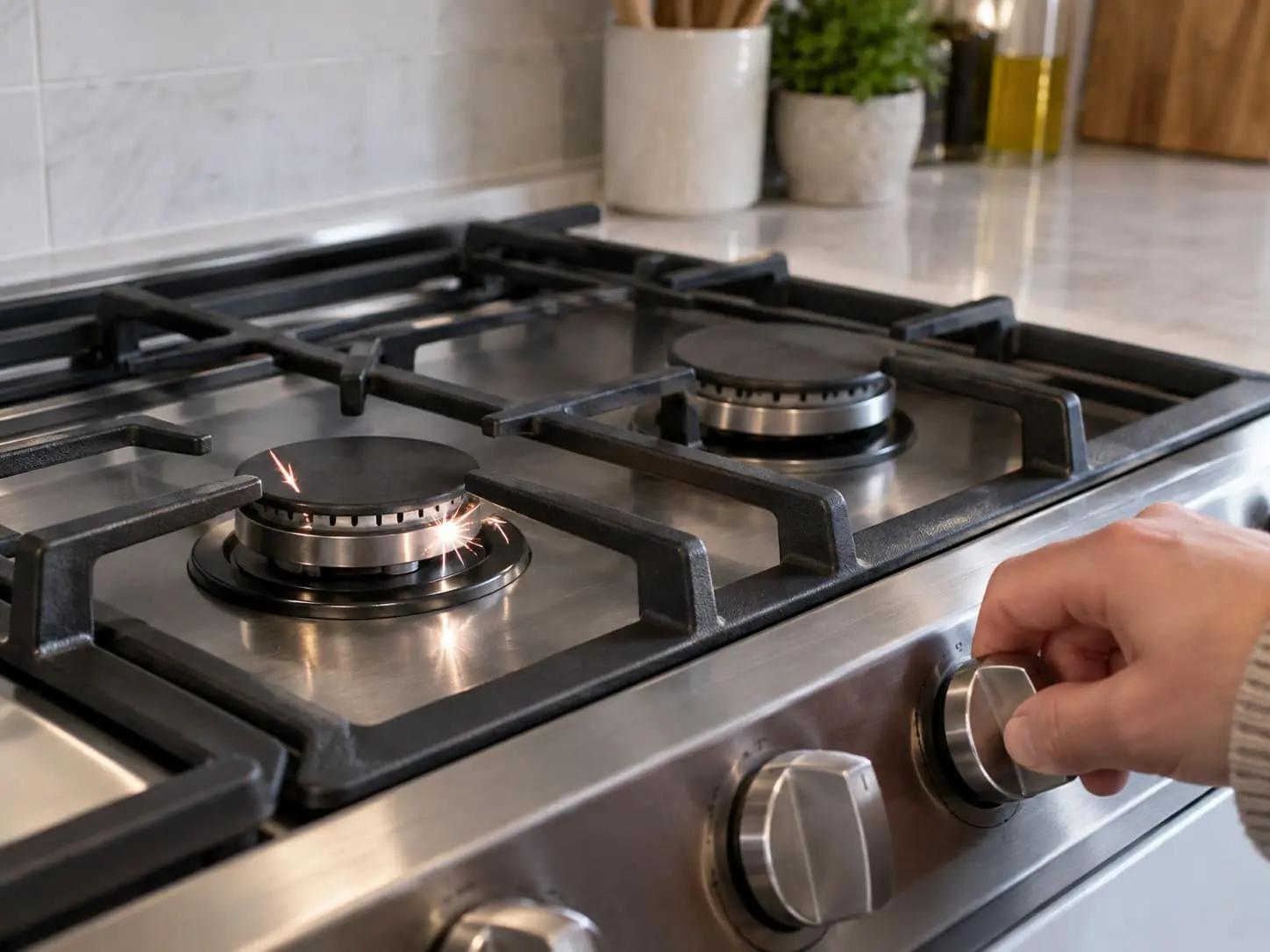
A gas stove that clicks without igniting is a common household issue in the US. It indicates a failure in the spark-to-gas ignition cycle. This symptom suggests underlying electrical or fuel delivery problems that require careful diagnosis. Ignoring this malfunction can lead to dangerous gas accumulation. Proper repair often involves complex component testing. Contacting a professional appliance repair service ensures safety and prevents further damage to your unit.
Understanding the Clicking Sound and Ignition Failure
Identifying the root cause of a persistent clicking noise without flame is crucial for safety. This symptom often points to deeper mechanical or electrical faults within the range. Professional diagnosis ensures you avoid unnecessary risks and costly mistakes.
Why the Spark Continues Without a Flame
The continuous clicking indicates that the ignition module remains active, sending repetitive electrical pulses to the spark igniter. This occurs when the system fails to detect a successful flame or when a component malfunctions. The module cycles endlessly in an attempt to establish ignition. This behavior suggests the ignition circuit is not receiving the correct signal to stop sparking once the gas ignites.
Differentiating Between Electrical and Fuel Issues
Separating electrical faults from fuel delivery problems is the first step in troubleshooting. Electrical issues often manifest as constant sparking without combustion, while fuel problems may involve irregular flame patterns or weak ignition. Recognizing the difference helps narrow down the potential causes effectively.
Identifying the Sign of a Weak Igniter
A weak igniter may produce a slow, lazy spark rather than a sharp, audible click. This weakness can stem from electrode misalignment, carbon buildup, or a failing component. The spark might not be strong enough to ignite the gas mixture efficiently. If the spark appears dim or distant from the burner ports, the igniter likely needs inspection and replacement by a certified technician.
Checking the Gas Supply and Pressure
Insufficient gas pressure can prevent ignition even if the spark is strong. A restricted gas line, closed valve, or low supply can starve the burner of fuel. The system continues to click because it detects no flame. Ensuring the gas supply is fully open and unobstructed is vital, though complex pressure issues require professional equipment to diagnose accurately.
Troubleshooting Burner Ignition and Spark Problems
Ignition failures often stem from localized blockages or electrical faults. Proper diagnosis requires isolating the issue to specific burners or control systems to ensure accurate repair strategies for US homes.
Addressing a Gas Stove Igniter Not Sparking on One Burner
When only a single burner fails to ignite, the problem usually remains isolated to that specific component rather than the entire appliance. This limitation helps technicians focus their diagnostic efforts more effectively.
Inspecting for Moisture and Debris
- Water accumulation around the electrode base can short-circuit the electrical path. Residual moisture from recent cleaning often causes temporary ignition delays.
- Food particles and grease buildup insulate the spark, preventing it from reaching the gas flame. This debris acts as a barrier that disrupts the electrical continuity needed for ignition.
Cleaning the Electrode Tip
A simple wipe with a dry cloth might remove surface grime, but deeply embedded carbon deposits require careful attention. Using abrasive materials can damage the ceramic insulator, leading to permanent failure. Professional cleaning ensures the electrode tip remains pristine without causing structural harm to the delicate ignition system components.
Diagnosing Why the Range Is Not Clicking or Lighting
If the clicking sound persists across all burners, the fault likely lies within the control mechanisms. This continuous noise indicates the system is attempting to ignite but fails to sustain a flame, suggesting a deeper systemic issue.
Assessing the Switch and Control Board
Worn knob switches may send inconsistent signals to the ignition module. A faulty control board can also cause erratic behavior, making the stove click repeatedly without releasing gas. Diagnosing these electrical components requires specialized multimeters and technical expertise. Incorrect troubleshooting can easily lead to further damage of the expensive control board.
When to Call for Professional Help
Attempting to repair internal electrical wiring or gas valves without proper certification poses significant safety risks. Gas leaks and electrical shorts can result in fires or explosions. Certified technicians have the tools to test voltage, check gas pressure, and replace faulty parts safely. Hiring experts ensures your appliance functions correctly and securely, avoiding costly mistakes and potential hazards in your kitchen.
Safety Hazards and Odor Detection
What to Do If the Gas Stove Won’t Light But Smell Gas
Immediate action is required if you detect an odor. Evacuate the premises immediately and avoid operating any electrical switches. Do not use open flames or generate sparks near the appliance. These actions prevent accidental ignition of accumulated fumes. Contact emergency services from a safe location to report the potential leak. Wait for authorized personnel to assess the situation before re-entering your home. Do not attempt to locate the source of the gas yourself.
Immediate Safety Protocols for Your Home
- Turn off the main gas supply valve if accessible and safe.
- Open windows and doors to ventilate the area thoroughly.
- Never attempt to fix the igniter or gas line independently.
- Keep children and pets away from the affected zone.
Understanding the Risks of Unburned Gas
Continuous sparking without flame allows methane or propane to escape into the air. This creates an explosive atmosphere that can ignite from minimal static electricity. Carbon monoxide, a colorless and odorless byproduct, may also accumulate if combustion is incomplete. These hazards pose severe health risks and property damage potential. Only certified technicians can properly diagnose and resolve these complex mechanical failures safely.
Prevention Strategies for All Appliance Owners
Regular maintenance prevents unexpected failures and ensures optimal performance. Consistent care reduces the likelihood of dangerous malfunctions. Professional servicing offers peace of mind and extends the lifespan of your kitchen equipment significantly.
Routine Maintenance for Your Gas Range
- Clean burner caps and bases to prevent clogs.
- Inspect electrical connections for wear or damage annually.
- Check gas lines for corrosion or leaks regularly.
- Test safety valves to ensure proper shut-off function.
Why You Should Trust a Dedicated Service Team
Experienced professionals possess the specialized tools needed for accurate diagnostics. They adhere to strict safety standards set by industry regulations. Hiring experts prevents costly mistakes and potential hazards associated with DIY repairs. Trust skilled technicians to restore your appliance safely and efficiently for years to come.
You might also be interested in…