
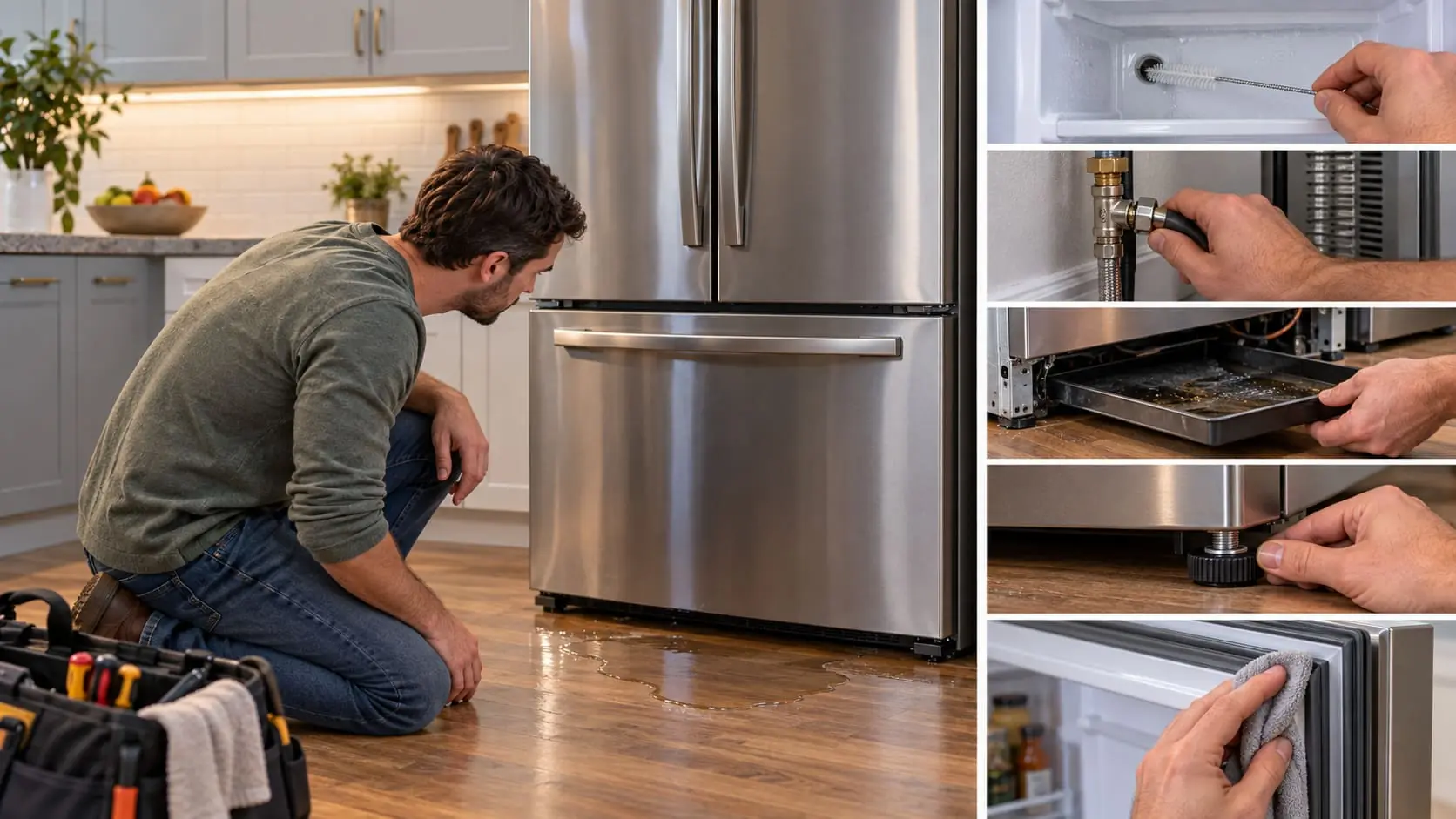
Water pooling in your fridge often signals a blocked drain line or a failing seal. These issues stem from complex mechanical failures that require proper diagnostic tools. DIY fixes frequently miss the root cause, leading to recurring leaks. Ignoring these signs can damage your kitchen floors or ruin the appliance’s internal components. Determining whether it is a simple clog or a compressor failure requires professional expertise. Contact an expert to prevent costly structural damage and ensure long-term functionality.
Understanding the Mechanics Behind a Leaking Refrigerator
The modern refrigerator is a complex machine that relies on precise thermodynamic cycles to keep food fresh. At its core, the appliance manages humidity and temperature through a continuous loop of evaporation and condensation. When these systems function correctly, moisture is managed efficiently and does not cause any issues within the unit. However, when the delicate balance is disrupted, water begins to appear in unexpected places, such as the bottom of the fresh food compartment or on the kitchen floor. Understanding the underlying mechanics is crucial for identifying whether the issue stems from a simple design feature or a genuine malfunction.
One of the primary components responsible for moisture management is the evaporator coil, located behind the back panel of the refrigerator. During normal operation, this coil becomes extremely cold, causing water vapor in the air to condense into liquid droplets. In a properly functioning system, this water drips down into a designated drain tube. This tube carries the moisture away from the internal chamber and directs it toward a drip pan situated near the compressor at the back of the unit. The heat generated by the compressor then evaporates the water into the surrounding air, preventing any accumulation inside the fridge.
When this drainage path is compromised, the entire system fails to remove moisture effectively. Even minor obstructions in the drain tube can cause water to back up, leading to pooling at the lowest point of the interior. This often happens when food particles, mold, or debris clog the narrow pathway. Additionally, if the defrost cycle malfunctions, excess ice can form and block the drain entirely. This creates a chain reaction where water has nowhere to go but into the living space of the appliance. Such mechanical failures require professional diagnosis to prevent further damage to the internal components.
Another critical aspect of these mechanics involves the door seals and the alignment of the unit. If the gaskets are worn or if the refrigerator is not level, warm air can enter the cabinet. This influx of warm, humid air meets the cold surfaces inside, causing rapid condensation. While this may seem like a simple user error, it often exacerbates underlying mechanical issues. The excess moisture can overwhelm the drainage system, leading to leaks that seem unrelated to the initial cause. Identifying these subtle interactions between airflow and mechanical parts is essential for a lasting repair.
- The evaporator coil condenses moisture from the air during the cooling cycle.
- A drain tube channels the collected water to an external drip pan.
- The compressor heats the pan to evaporate water into the kitchen air.
- Blockages in the drain tube cause water to back up into the fridge.
- Malfunctioning defrost heaters can create ice barriers that stop drainage.
- Improper leveling affects door seals and increases condensation levels.
These mechanical processes are designed to be invisible and silent. When they fail, the results are immediate and noticeable. Water pooling is not just a nuisance; it is a symptom of a deeper issue within the refrigeration cycle. Ignoring these signs can lead to more severe problems, such as mold growth or electrical hazards. Professional technicians have the tools to test these systems accurately, ensuring that every component is working in harmony. Without the right expertise, attempts to fix the issue may only provide temporary relief while the root cause continues to deteriorate the appliance.
Diagnosing Water Pooling at the Bottom of the Unit
When water finds its way to the floor beneath or inside your appliance, it is crucial to understand the primary pathways where this failure occurs. Many homeowners attempt quick fixes, but without proper knowledge, these efforts can exacerbate the problem. The following sections outline the critical areas that need expert inspection to ensure the longevity of your cooling system.
Locating and Clearing the Internal Drain Tube
The internal drain tube is a narrow channel designed to carry condensation away from the evaporator coil during the defrost cycle. Over time, this pathway can become obstructed by food particles, ice, or mold buildup. When this blockage occurs, water has nowhere to go but to overflow into the refrigerator compartment or drip onto the floor. While it might seem simple to clear this tube, improper cleaning methods can push debris further down or damage the delicate plastic channel. A professional technician possesses the specialized tools required to safely unclog the tube without causing harm to the internal structure. Attempting to use household items like wire hangers can easily puncture the tube, leading to costly repairs that far exceed the cost of a standard service call. Proper diagnosis involves verifying the flow rate and ensuring the tube connects securely to the drip pan, a task that requires precision and experience.
Inspecting the Drip Pan Under the Appliance
Located at the bottom rear of the refrigerator, near the compressor, is the drip pan or evaporative tray. Its purpose is to collect the water drained from the internal tube and allow it to evaporate using the heat generated by the compressor. If this pan is cracked, misaligned, or overflowing, water will leak directly onto your kitchen floor. This component is often overlooked in routine maintenance but plays a vital role in preventing moisture-related damage. Professionals can inspect the pan for hairline fractures that are not visible to the naked eye and ensure it is sitting correctly in its designated slot. Furthermore, the condition of the compressor itself affects evaporation; if the compressor is not generating adequate heat, the water will not evaporate efficiently. This requires a comprehensive diagnostic check that goes beyond a simple visual inspection, highlighting the need for skilled appliance repair services.
Evaluating Leveling and Door Seal Integrity
The physical installation and sealing of your refrigerator are fundamental to its proper operation. If the unit is not level, water may not flow correctly toward the drain tube, instead pooling in unintended areas. Similarly, worn or damaged door seals can allow warm, humid air to enter the compartment, leading to excessive condensation and ice formation. These issues are often interconnected; a slight tilt can prevent the door from closing tightly, compounding the sealing problem. A qualified technician can adjust the leveling legs with precision and assess the integrity of the gaskets using specialized tests. They can determine whether the seals are merely dirty or if they have degraded to the point of requiring replacement. Ensuring that the refrigerator is properly installed and sealed is critical for maintaining efficiency and preventing future water leakage issues.
Investigating Moisture Accumulation on the Top Shelf
Checking Condenser Coils for Dust and Debris
Dirty condenser coils are a frequent culprit behind excessive internal humidity. When these coils accumulate dust, pet hair, or kitchen grease, the refrigerator must work significantly harder to dissipate heat. This increased workload causes the compressor to run longer cycles, which can lead to uneven cooling. As the unit struggles to maintain the set temperature, moisture from the air has more opportunities to condense on the coldest surfaces inside, often resulting in water droplets on the upper shelves. Regular cleaning is essential, but accessing these coils often requires removing panels and disconnecting power, a task that carries risk for untrained individuals. Professional technicians have the proper tools to clean these areas without damaging sensitive electrical components or voiding manufacturer warranties.
Monitoring Temperature Settings and Airflow
Incorrect temperature settings or blocked air vents can disrupt the delicate balance required for proper operation. If the thermostat is set too low, excessive ice may form, which then melts and creates water. Conversely, if the vents are obstructed by food items or improper storage, cold air cannot circulate freely. This stagnation leads to warm pockets where humidity builds up rapidly. The air circulation fans play a critical role in moving air through these vents. When these fans fail or become obstructed, the internal environment becomes inconsistent. Diagnosing airflow issues involves complex testing of sensor readings and fan motor functionality. Attempting to adjust internal components without proper knowledge can lead to further damage to the sealed system or electronic control board.
Identifying Faulty Defrost System Components
The defrost system is responsible for preventing ice buildup on the evaporator coils. This system includes heaters, timers, and sensors that work in unison. When any of these components fail, ice can accumulate rapidly and block the internal drainage path. This ice often forms in the upper sections of the cooling compartment before melting unpredictably. A faulty defrost timer or a broken heater element will not remove this ice, leading to persistent water leakage inside the fresh food section. These failures are not always obvious to the naked eye. They require specialized diagnostic equipment to test electrical continuity and sensor resistance. Misdiagnosing a defrost issue as a simple clog can result in repeated repairs and continued water damage to your cabinetry and floors.
- Professional diagnosis ensures accurate identification of electrical faults.
- Incorrect repairs can void warranty coverage on modern units.
- Hidden component failure often leads to extensive water damage.
Addressing Water Issues in Compact and Mini Refrigerators
Smaller units present unique challenges for moisture management. Their restricted interior volume and simplified drainage systems often lead to unexpected water accumulation. Understanding these specific mechanical limitations is crucial for maintaining appliance function and preventing interior damage. The following sections examine the distinct vulnerabilities of mini-fridges and how to identify potential failure points before they escalate.
Understanding Smaller Drain Pathways in Mini Models
Compact refrigerators utilize significantly narrower drain channels compared to standard full-size units. These restricted pathways are prone to rapid obstruction due to the limited space available for water flow. When condensation forms during the cooling cycle, it must travel quickly to the evaporative pan located beneath the compressor. Any deviation from this direct path can result in internal pooling. The design of these units often places the drain hole in a location that is difficult to access without specialized tools. This structural constraint means that minor debris can cause immediate backflow issues. Recognizing the specific layout of your unit’s internal plumbing is the first step in diagnosing persistent moisture problems. Failure to acknowledge these design limitations often leads to misdiagnosis, where users attempt generic fixes that do not address the root cause.
Preventing Blockages from Food Particles
- Crumbs and small food debris can easily fall into the drain opening during normal use.
- Sticky residues from spills create an adhesive surface that traps additional particles over time.
- Mold spores can thrive in the dark, moist environment of a blocked drain tube.
Prevention requires a proactive approach to interior cleanliness. Regular inspection of the drain area can identify early signs of accumulation before a complete blockage occurs. However, attempting to clear these narrow tubes with household items like wire hangers can damage the plastic lining. This damage can create rough edges that catch more debris, worsening the problem. Professional technicians utilize specific flexible brushes and vacuum tools designed for these compact systems. They can ensure the entire length of the drain tube is cleared without risking structural integrity. Ignoring the signs of slow drainage often results in water leaking onto countertops or damaging the flooring beneath the appliance. Seeking expert assistance ensures the drainage path remains clear and functional without causing unintended harm to the unit’s internal components.
Managing Door Closure and Insulation Gaps
The integrity of the door seal plays a critical role in moisture control for mini-fridges. Unlike larger units, compact refrigerators have less buffer space to absorb minor temperature fluctuations. If the gasket is compromised, warm ambient air enters the cabinet, causing rapid condensation on interior surfaces. This excess moisture overwhelms the small drain system, leading to overflow. Inspecting the magnetic seal for cracks or detachment is essential. However, replacing these seals requires precise alignment to ensure an airtight closure. Incorrect installation can leave subtle gaps that are difficult to detect but cause significant moisture issues. Additionally, improper leveling can prevent the door from latching securely. This creates a cycle of humidity buildup that strains the cooling system. Professional diagnosis can determine if the issue lies with the seal, the hinges, or the internal thermostat calibration. Addressing these factors promptly preserves food safety and maintains energy efficiency.
Common Misconceptions About Fridge Condensation
Many homeowners misinterpret normal appliance behavior as catastrophic failure. Understanding the difference between expected condensation and actual leaks prevents unnecessary panic and wasted repair costs.<\/p>\n\n
Distinguishing Normal Moisture from True Leaks
A slight dampness on the glass shelves or the back wall of the fresh food compartment is often mistaken for a leak. In reality, this is standard thermodynamic behavior. Warm air meets cold surfaces, causing moisture in the air to condense into water droplets. This process is entirely natural and indicates the refrigerator is functioning correctly. True leaks, however, involve water accumulating on the floor, pooling in the crisper drawers, or dripping from internal components. These signs suggest a blockage in the drain line or a failure in the defrost system. Homeowners should observe whether the moisture evaporates quickly or persists. Normal condensation usually dries within minutes of the door closing, while leak-related water remains stagnant. Confusing these two states can lead to calling for service when none is needed, or ignoring serious issues that require immediate attention. The key is to monitor the volume and location of the water. If water is found only on the shelves, it is likely environmental. If it appears on the floor or in drawers, a deeper issue exists.<\/p>\n\n
The Role of Humidity in Kitchen Environments
Kitchens are high-moisture zones due to cooking, dishwashing, and general activity. High humidity levels significantly impact refrigerator performance. When the kitchen humidity is elevated, more moisture enters the appliance each time the door opens. This excess moisture must be removed by the cooling system, which can lead to increased condensation. Many users believe their refrigerator is broken when they see more water than usual during hot, humid summer months. This is not a defect but a response to environmental conditions. Proper ventilation in the kitchen and using exhaust fans can help reduce the humidity load on the appliance. Ignoring these environmental factors often leads to false diagnoses of mechanical failure. The refrigerator is designed to handle a certain level of humidity, but extreme conditions can overwhelm the system\u2019s ability to manage moisture effectively. Recognizing this helps in attributing water accumulation to the environment rather than internal malfunction.<\/p>\n\n
When Ice Buildup Signals a Major Failure
While some frost is normal, excessive ice buildup is a critical warning sign. Ice forming on the evaporator coils or in the freezer section indicates a failure in the defrost cycle. This is not a simple condensation issue but a mechanical fault that can lead to water leaks when the ice melts. The defrost heater, timer, or thermostat may be faulty. If users notice large chunks of ice or frost accumulating rapidly, they should seek professional help. Attempting to defrost the unit manually without addressing the root cause will result in recurring problems. The melted water from this ice often overflows the drain pan or leaks into the fresh food compartment. This type of failure requires diagnostic tools and expertise to resolve. Continuing to use a refrigerator with significant ice buildup can damage the compressor and reduce energy efficiency. Therefore, recognizing ice accumulation as a symptom of a larger systemic issue is crucial for maintaining appliance longevity.<\/p>
Recognizing Signs That Require Professional Repairs
When basic maintenance fails to resolve water accumulation, immediate professional intervention is essential. Ignoring complex mechanical faults can lead to severe structural damage within your home and costly repairs for the appliance. Identifying the right moment to call an expert protects your kitchen from flooding and prevents further deterioration of internal components.
Identifying Persistent Water Pooling Despite Cleaning
Even after meticulously clearing the drain tube and wiping down the interior, water may continue to collect at the bottom of the unit. This persistent issue often signals a deeper malfunction that DIY methods cannot fix. The drain line might be cracked, or the drain pan could be improperly seated, causing water to spill onto the floor rather than evaporating. Additionally, a malfunctioning defrost heater or thermostat may cause ice to build up in places where it should not, eventually melting and overwhelming the drainage system. These internal failures require specialized diagnostic tools to pinpoint the exact source of the leak. Attempting to dismantle the back panel or access the compressor area without proper training can void warranties and cause irreparable harm to the sealed refrigeration system. Professionals have the expertise to replace worn seals, repair broken heaters, and ensure the evaporator fan is functioning correctly to maintain proper airflow. Leaving this problem unchecked allows moisture to seep into cabinetry, promoting mold growth and rotting wood structures over time.
Detecting Unusual Noises from the Compressor
Strange sounds emanating from the refrigerator often accompany water leaks, serving as a critical warning sign. A humming, clicking, or buzzing noise that persists longer than usual indicates the compressor is struggling to maintain pressure. This strain can result from refrigerant leaks or electrical failures that compromise the entire cooling cycle. When the compressor fails, the evaporator coils may freeze completely, leading to massive ice formation that blocks the drain channel. The resulting meltwater has nowhere to go but into the fridge compartment. Listening for these auditory cues helps distinguish between normal operation and impending mechanical failure. Ignoring these noises allows the issue to escalate, potentially causing the compressor to burn out entirely. A blown compressor is a significant repair that requires certified technicians to handle refrigerants safely and replace heavy-duty electrical components. Professionals can also check the relay and capacitor, which often fail alongside the compressor, ensuring a comprehensive fix rather than a temporary patch.
Assessing the Need for Expert Component Replacement
Some failures require the replacement of specific internal parts that are not accessible or safe for homeowners to handle. Components such as the defrost timer, main control board, or evaporator fan motor may need expert assessment to determine if replacement is necessary. These parts control the timing and temperature of the defrost cycle, directly impacting water management. If the control board malfunctions, it may send incorrect signals to the heater, causing either excessive ice buildup or insufficient drainage. Similarly, a broken evaporator fan allows cold air to stagnate, leading to uneven cooling and condensation issues. Professional technicians can order exact model-specific parts and ensure they are installed with precision. Improper installation of these components can lead to repeated failures, creating a cycle of leaks and repairs. Entrusting this work to experts ensures that the refrigerator operates efficiently, saving energy and preventing further water damage to your home.
You might also be interested in…